Charizard, redrawn across the medium.
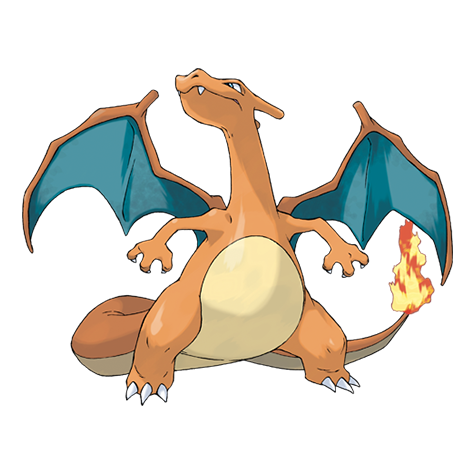 Kanto · 1999–present
The body holds; everything around it shifts.
More than two decades on a single subject — the same wings, the same upturned head, the same fire, redrawn for every era the medium has entered.
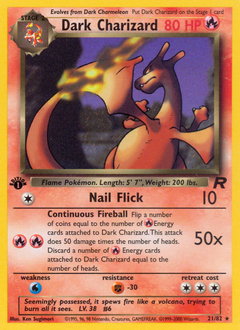
This guide reads Charizard not as a character but as the medium’s most-redrawn subject. Across more than a hundred staging cards spanning twenty-six years, the same body — wings extended, head upturned, hind legs planted — has been reshaped by every hand the TCG has employed, every printing technology the medium has adopted, and every card format the game has invented.
The eight picks below trace that redraw. From Arita’s 1999 painted Base to danciao’s 2025 cool-palette Mega X, the silhouette is constant. What changes is how the medium chooses to render it — and what that choice means.
Eight cards reading the same silhouette.
Selected for the way each one redraws the medium's most familiar body — across illustrator, era, palette, and frame.
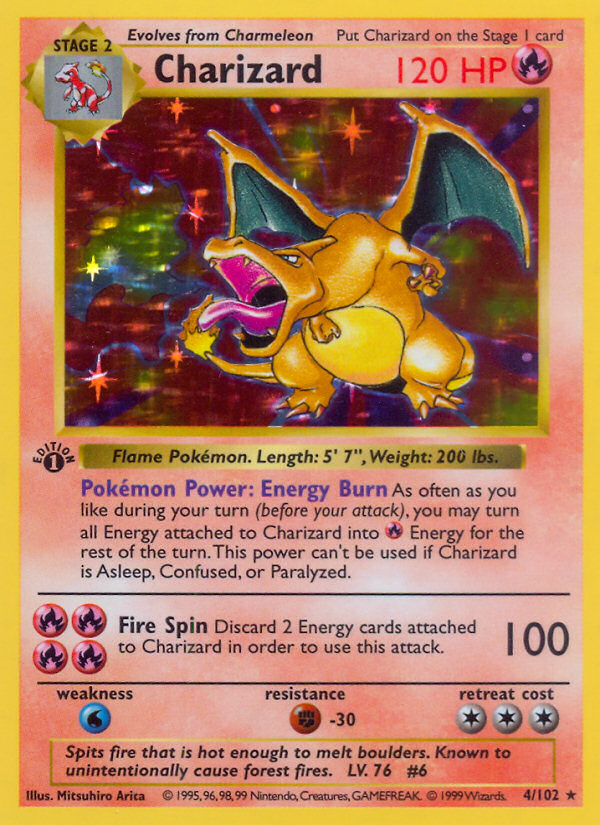
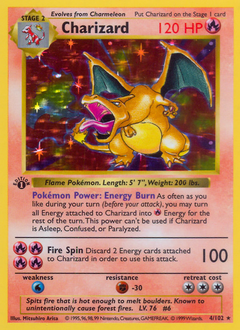
Charizard
1999The medium's first Charizard. Arita paints smoke against red gradient; the silhouette every later illustrator either follows or pushes against.
View card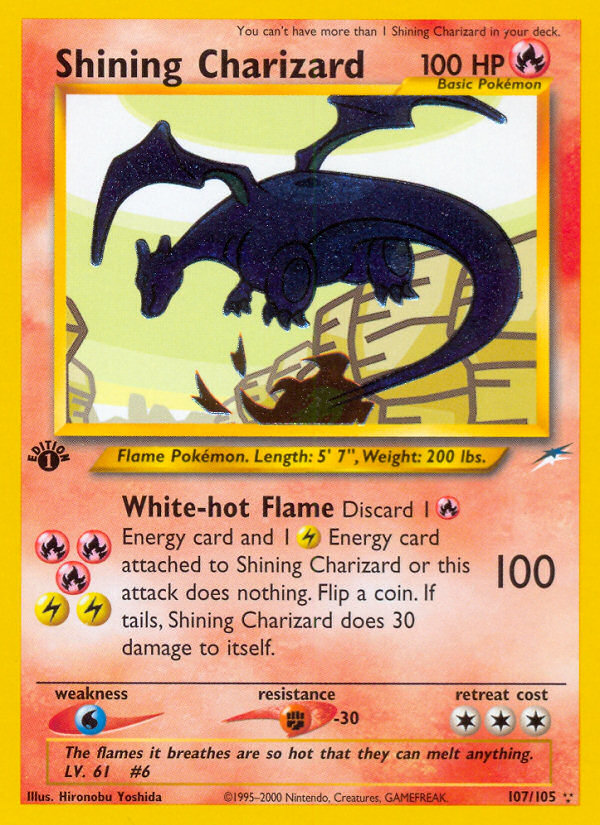
Shining Charizard
2002The first deliberate rupture. Yoshida paints Charizard as a single foiled figure on a starry ground — the same body re-rendered as myth.
View card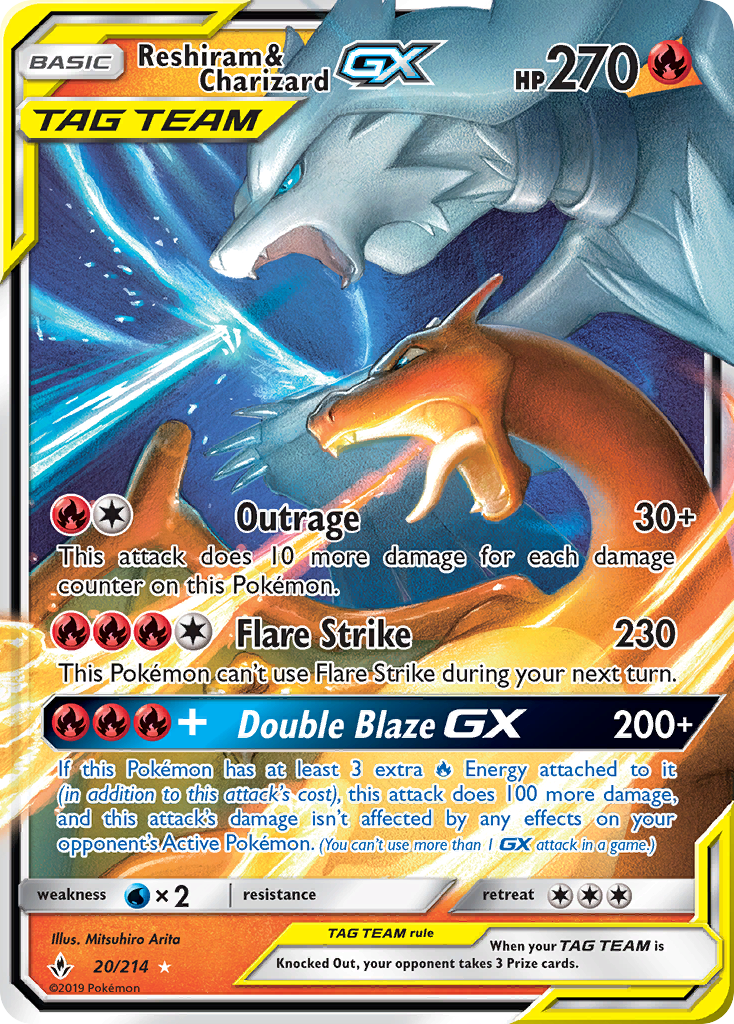
Reshiram & Charizard-GX
2019Twenty years after Base, Arita returns to Charizard in a tag-team format that didn't exist when he started. Same hand, new medium.
View card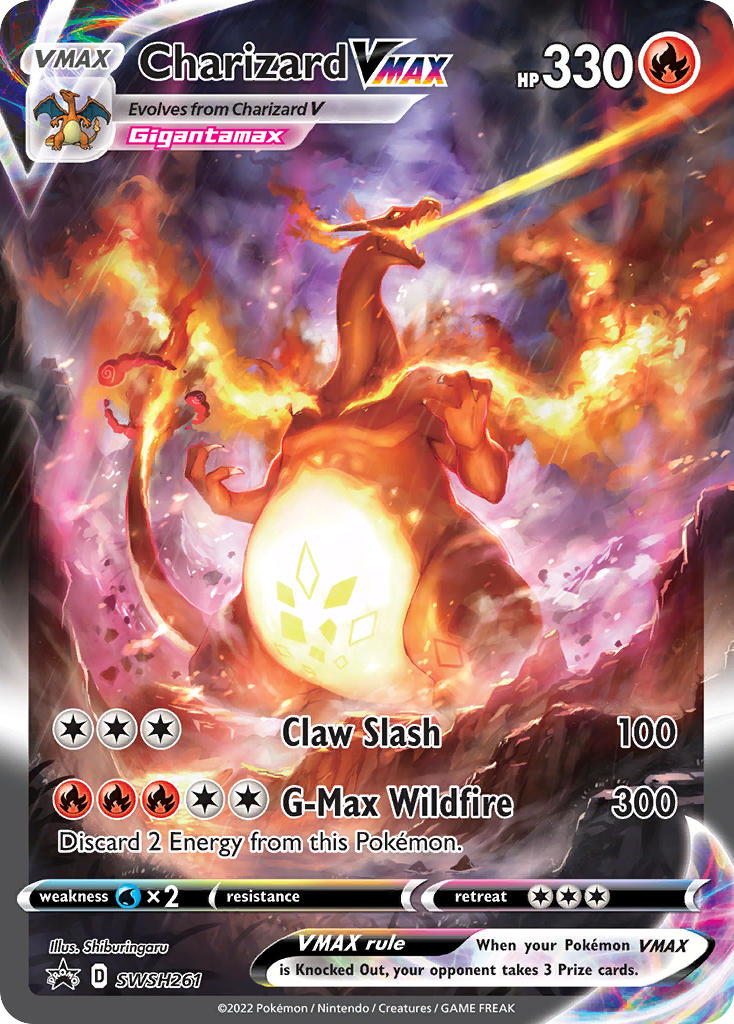
Charizard VMAX
2019Full-bleed inferno. Shiburingaru's Charizard consumes the card edge to edge — the frame becomes weather, the painting becomes the card.
View card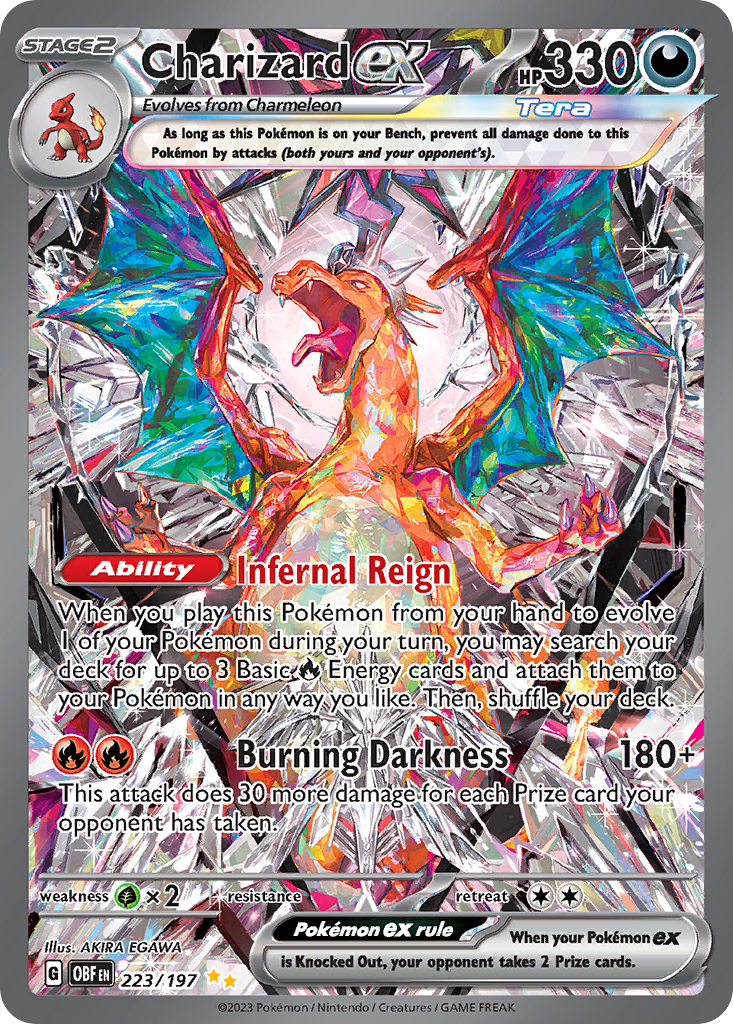
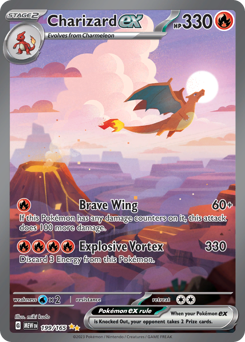
Charizard ex
2023Egawa's Tera Charizard treats the crystalline frame as part of the figure — the card format absorbed into the image itself.
View card
Mega Charizard X ex
2025Dark palette over warm subject. danciao paints Mega Charizard X in cool charcoal — the medium proving fire doesn't need orange.
View card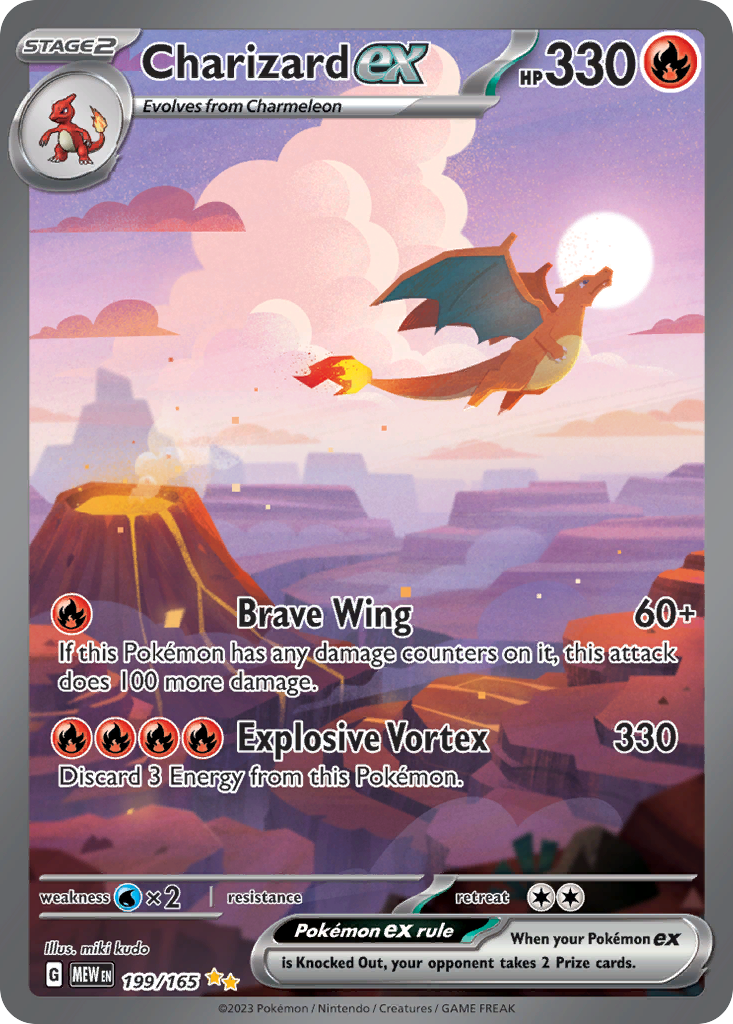
Charizard ex
2023miki kudo's storybook Charizard. Soft pastel ground, whimsical posture — the most-feared Pokémon re-imagined as gentle without breaking.
View card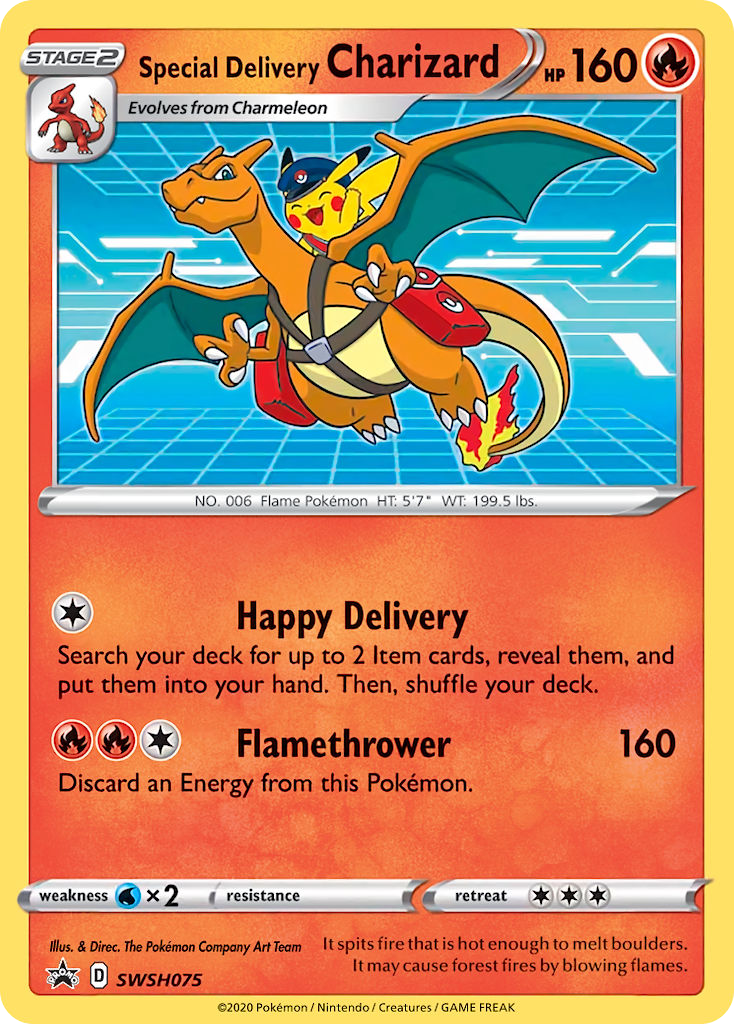
Special Delivery Charizard
2019Postal cap, friendly stance. The medium's most theatrical creature dressed as a mailman — every fearsome marker stripped, the same silhouette preserved.
View cardWhat stays, what shifts.
Four threads recur — the criteria the selection was built against.
- On the silhouette
- Across every era, the wings extend, the head tilts up, the hind legs plant. The body shape itself is the constant the medium agreed not to change. Read the picks side by side and the silhouette holds; what shifts is everything around it.
- On fire as register
- In the first decade, fire is atmosphere — smoke, gradient, halo. In the second decade, fire is event — explosion, full-bleed inferno. In the third decade, fire is sometimes absent: a postal cap, a gentle storybook posture, a charcoal Mega X with no warm orange at all.
- On the frame
- Early Charizards sit inside their card frame, behind chrome and set symbol. Modern Charizards push through it — VMAX bleeds to the edge, Tera ex absorbs the frame into the image, alt-art ignores it. The card stops being a window and becomes the painting.
- Painted to digital
- The Wizards-era hands worked in gouache and airbrush; 5ban Graphics opened the digital register in 2017; the 2023 alt-arts return to illustrative painterliness using digital tools. The medium hasn't moved away from paint — it has changed what paint means.
Pokémon guides are selected by Artchu editorial — weighing surface treatment, palette, composition, frame relationship, and the illustrator’s hand across the Pokémon’s card-art history. The selection cuts across illustrator, era, set, and format; the Pokémon itself is the constant. Availability of high-quality imagery is a baseline criterion. Rarity, market value, popularity, and grading are not selection criteria.