Tomokazu Komiya, the illustrator who fills the frame.
 TK
TK
The illustrator who never leaves a corner empty
The creature is rarely the busiest thing on the card.
Most Pokémon illustrators give the creature room — a clean field, a single light, space to breathe. Tomokazu Komiya does the opposite. He fills the frame: toxic tangles, ranks of tiny faces, stained-glass colour, ruins and relics and leaves, crowded to the edges until the background stops being background. These are mostly commons and uncommons, the cards people sort past — which is exactly why they reward slow looking. This guide follows one compositional habit across his mature work: how density, pattern, and repeated form keep the eye moving, and how a crowded card can still hold its shape.
Nine cards, filled to the edges
9 cards · chosen for how Komiya works the whole frame — ornament, pattern, and density, not novelty.
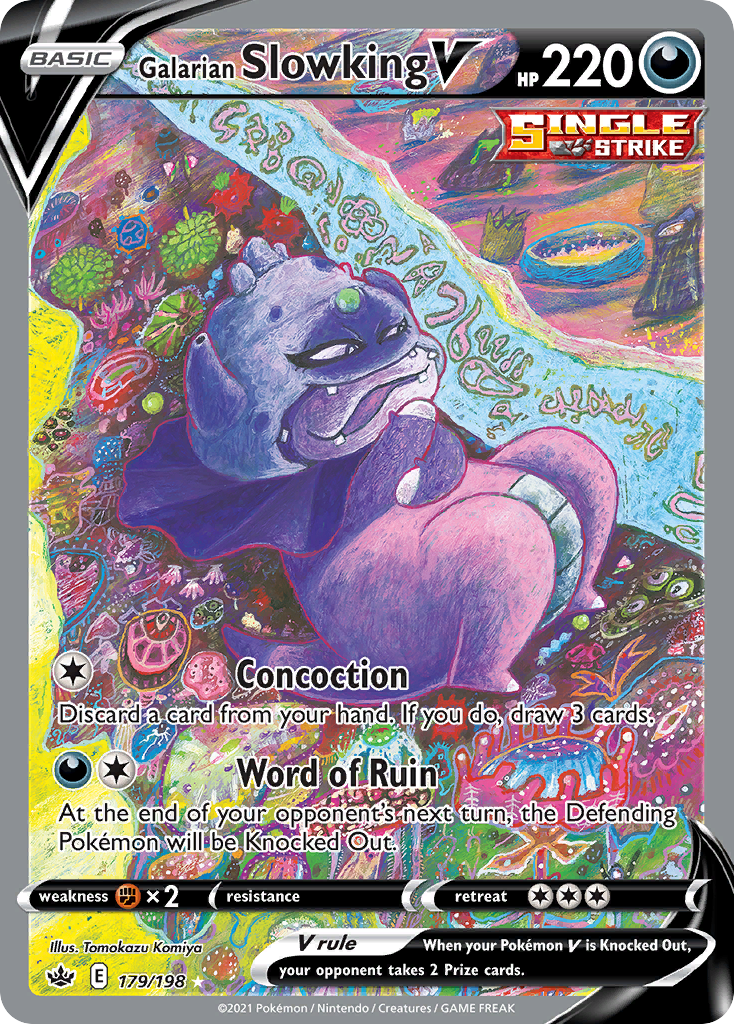
Galarian Slowking V
2021The habit at full volume. Slowking sits inside a toxic tangle of vines, spores, and watching eyes — the ornament crowds in until the creature is just one element among many.
View card
Brute Bonnet
2023Density as overload. A riot of acid-bright mushrooms, eyes, and spores fills every inch; the eye never settles, kept moving by sheer accumulation of small forms.
View card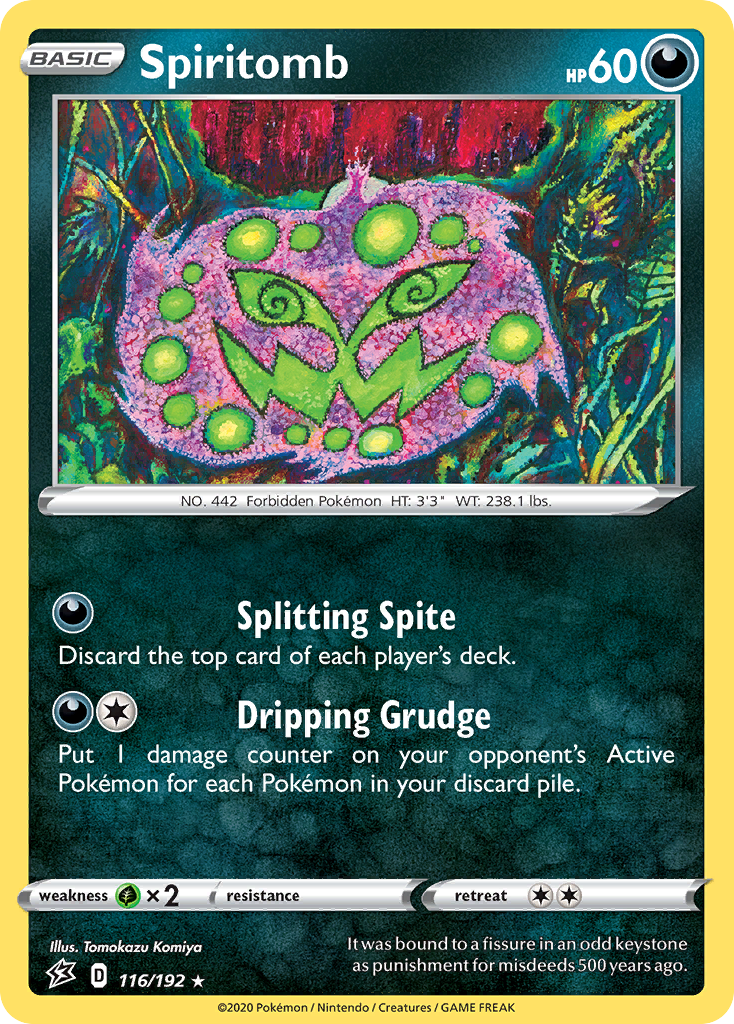
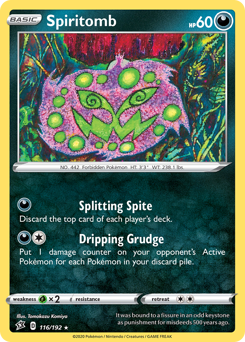
Spiritomb
2020Pattern as subject. The keystone’s hundred-odd faces repeat across a dark damask ground — repetition itself becomes the composition, ornamental and faintly menacing.
View card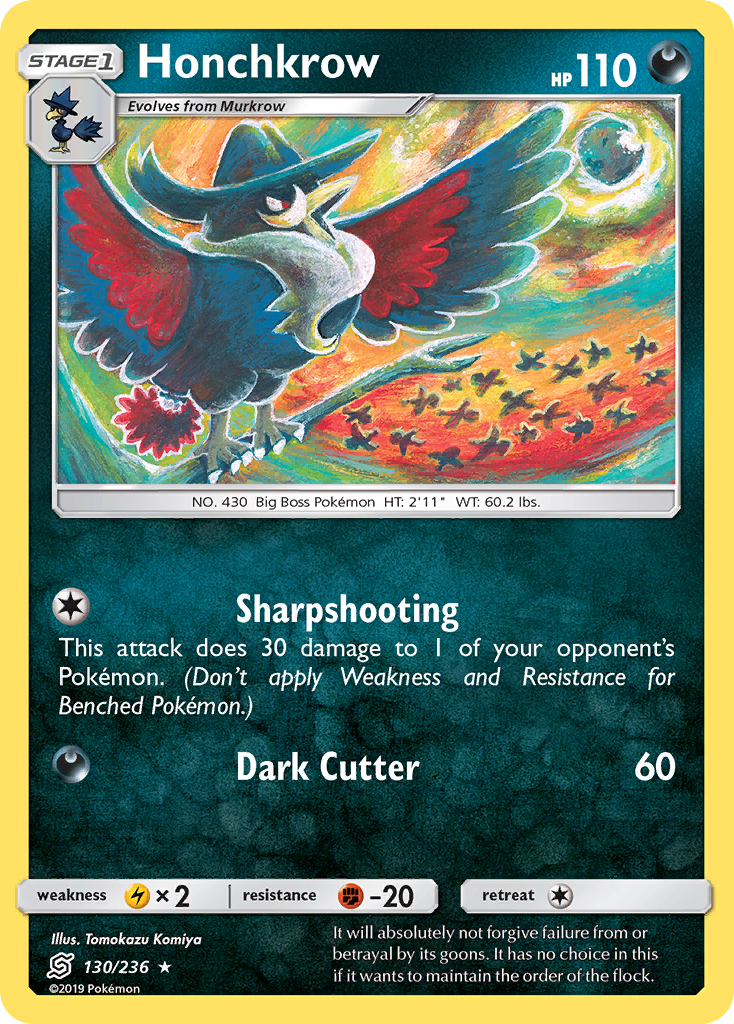
Honchkrow
2019Colour broken into shards. The sky behind the crow is built from stained-glass facets — flat planes of saturated colour packed edge to edge, structure made from fragments.
View card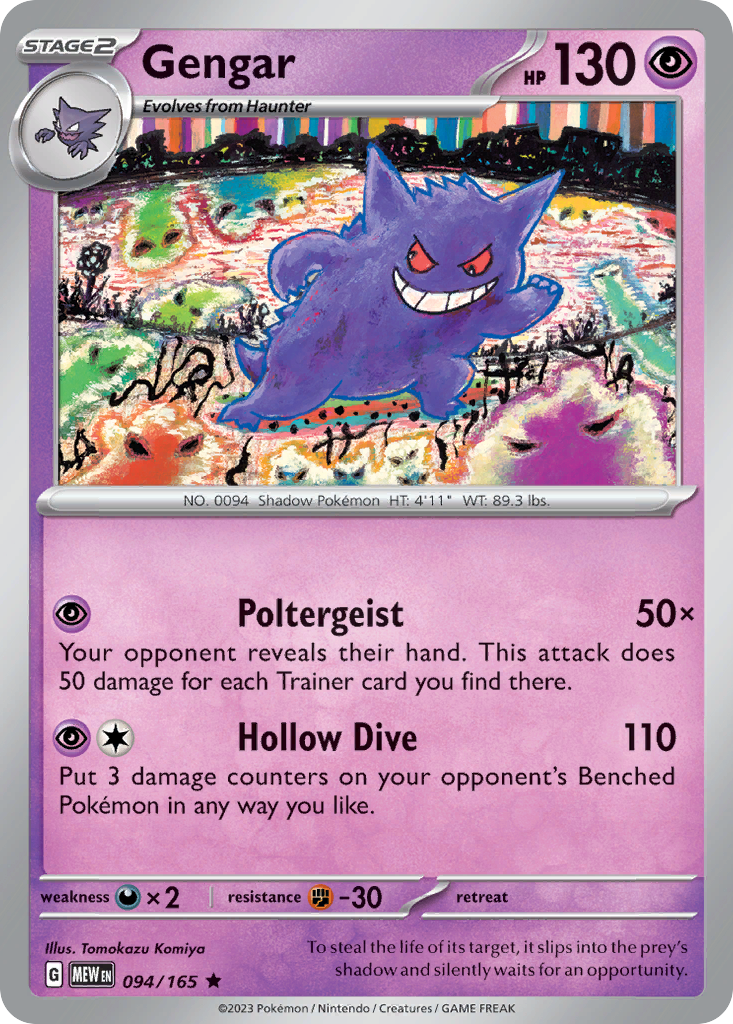
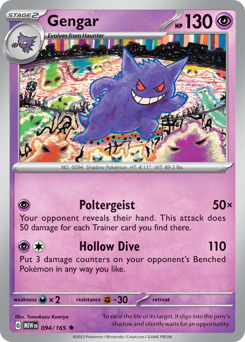
Gengar
2023Crowding turned to narrative. Gengar grins in a packed dusk graveyard, tombstones and small details filling the field — the density tells a small story, not just decorates.
View card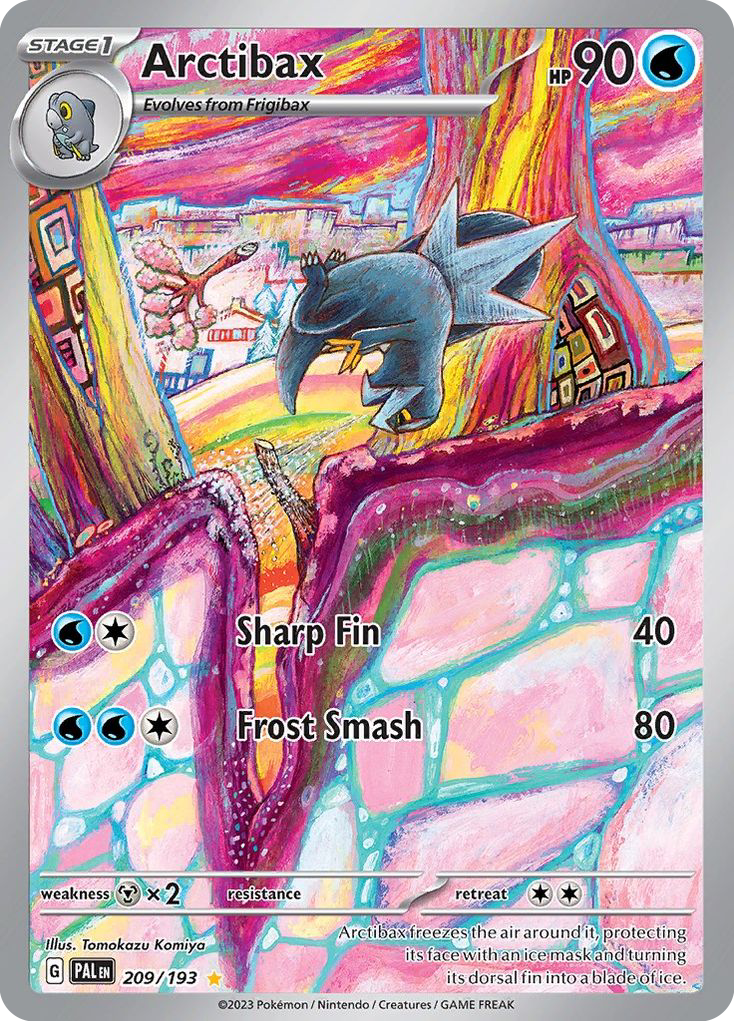
Arctibax
2023Compression as architecture. Angular planes of magenta and ice interlock into a fractured cavern — the frame packed with hard geometry rather than ornament.
View card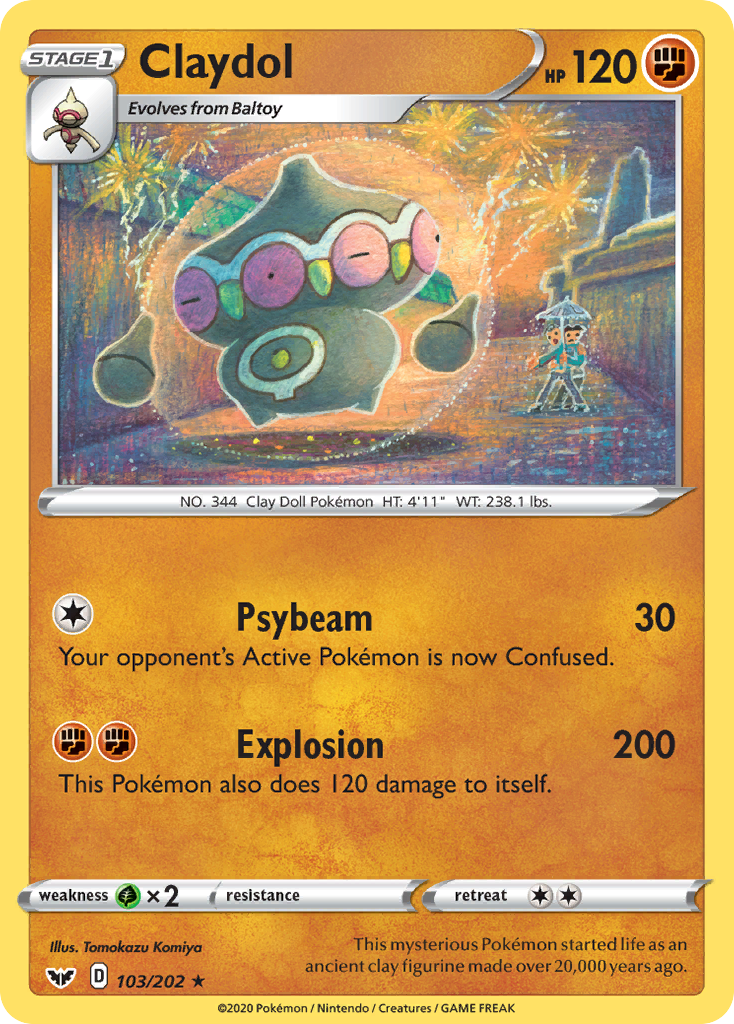
Claydol
2020An archaeology of the frame. Claydol floats among carved relics and clay figures arranged across the ground — ornament as artifact, the background a dig site.
View card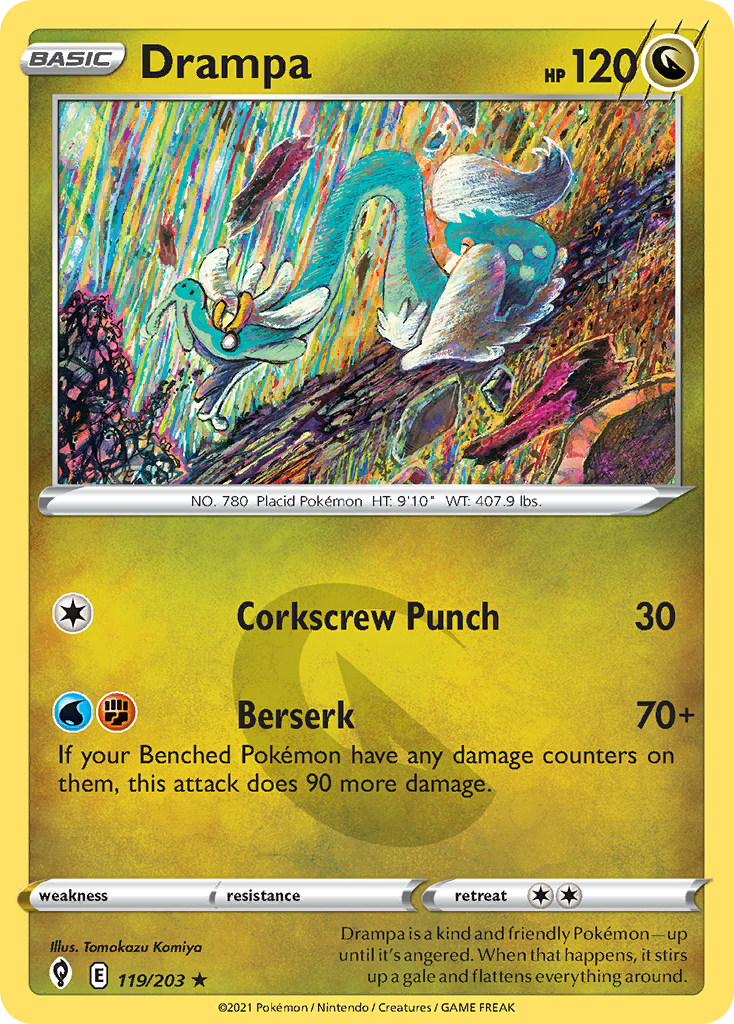
Drampa
2021Filled with weather. A swirl of autumn leaves and wind wraps the whole card, the foliage as busy as any creature — decoration that moves.
View card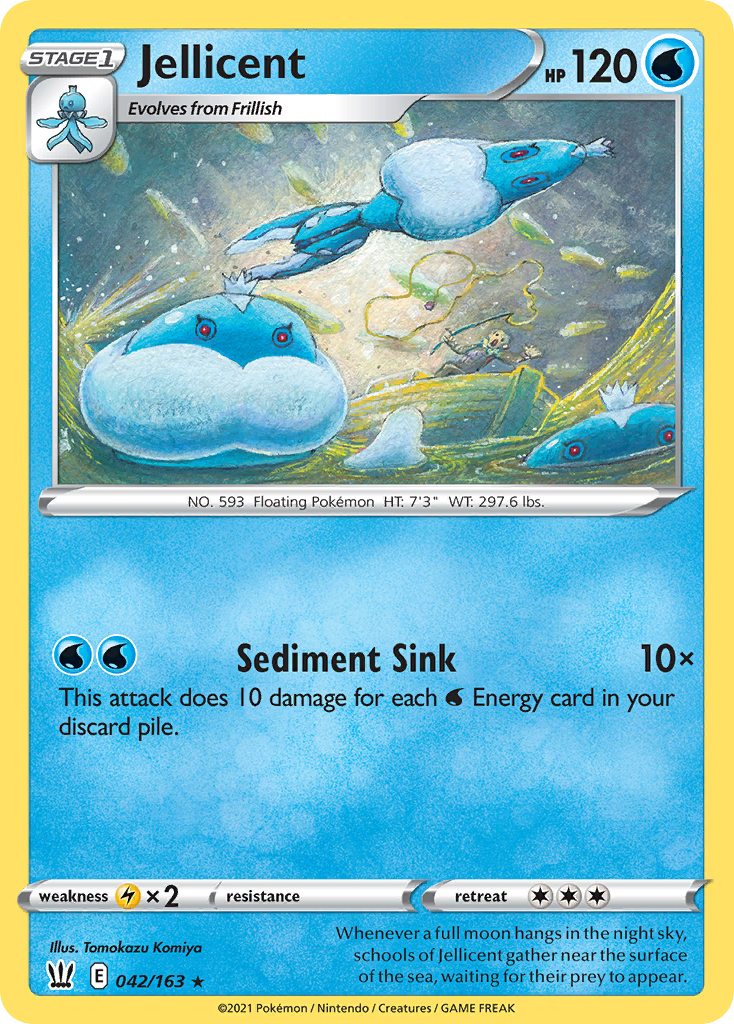
Jellicent
2021The habit, dialled down. Pale water, soft bubbles, a lot of quiet — proof the density is a choice, not a reflex. Komiya can also leave room to breathe.
View cardHow a crowded card holds its shape
Three things Komiya does so that filling the frame reads as composition, not clutter.
- Repetition as structure
- Komiya leans on repeated forms — faces, leaves, mushrooms, facets — so the crowding has rhythm. The eye moves across the repeats rather than getting lost; pattern does the organising that empty space usually would.
- The background promoted
- On most cards the background recedes. Komiya brings it forward until it competes with the creature — a graveyard, a relic field, a tangle of growth — so the whole rectangle is the picture, not just the figure in the middle.
- Density is a choice
- The quieter cards — a pale Jellicent, an open sky — prove the crowding is deliberate. When Komiya fills the frame he is choosing pressure and incident over calm, and the decision shows in how full the card sits.
More to read.
This guide is an editorial reading of Tomokazu Komiya’s card artwork, chosen for how each card fills and organises its frame — density, pattern, ornament, and repeated form. Cards are selected for visual interest across his work, not for rarity, market value, or grade. Selections are refreshed periodically.