Pokémon cards painted after dark.
How the medium paints the dark
Night is not a colour. It is a set of choices about light.
Daylight is generous — it shows everything. Night withholds. To paint after dark, an illustrator has to decide what little will be lit and let the rest fall into shadow: a single moon, a candle flame, a glow on water, a silhouette against a paler sky. This guide gathers cards where night itself is the subject — not dark-coloured creatures, but scenes built from low light. Moonlit graveyards, ember-lit caverns, a Pokémon dissolving into the void. Read together, they show the grammar of the nocturne: how the medium makes darkness visible by choosing, very carefully, where to put the light.
Eleven cards built from low light
Selected for how each makes the dark legible — moonlight, glow, silhouette, and held shadow — not for being dark-coloured.
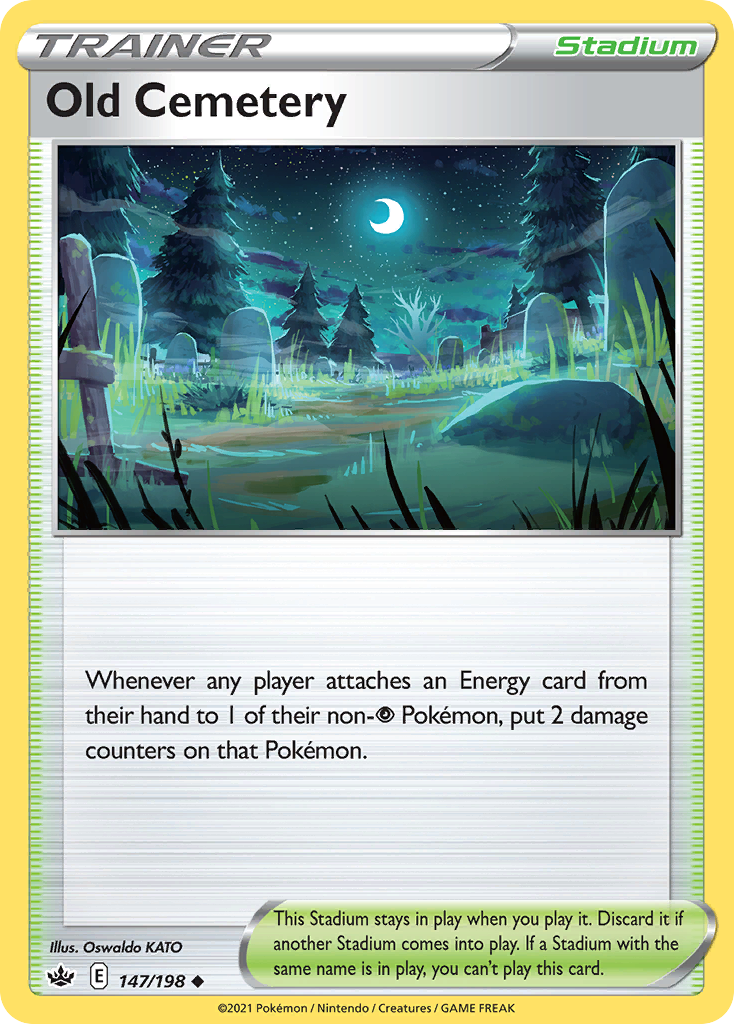
Old Cemetery
2021Night with no creature in it. A graveyard under a thin crescent moon, the stones lit just enough to read — the whole card is a study in how little light a scene needs.
View card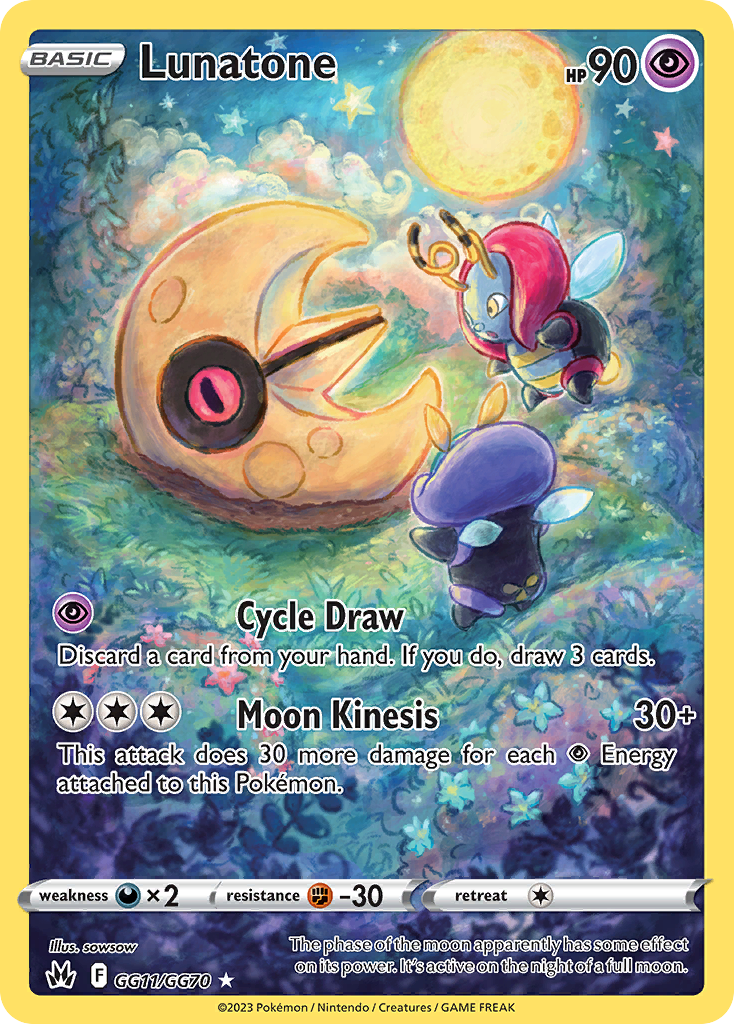
Lunatone
2023The moon as subject. A child looks up at Lunatone hung beside a yellow crescent in a star-thick sky — the night drawn as wonder, not menace.
View card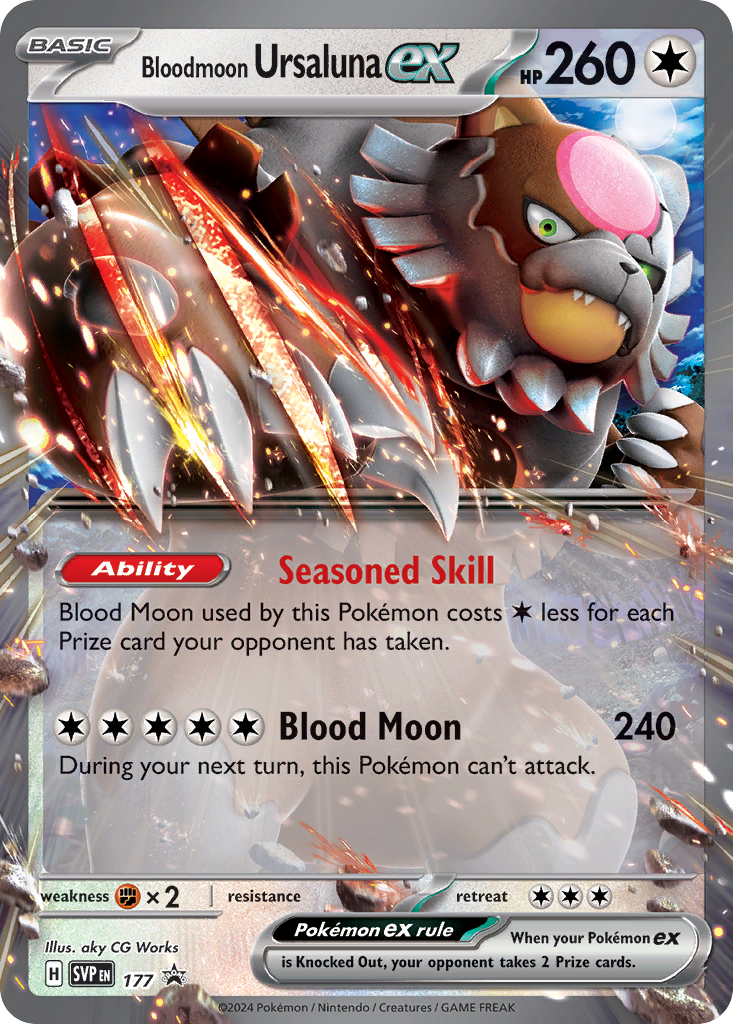
Bloodmoon Ursaluna ex
2022One enormous moon. A blood-red disc fills the sky behind Ursaluna, the light tipped from silver to crimson — the same nocturne, recoloured to unease.
View card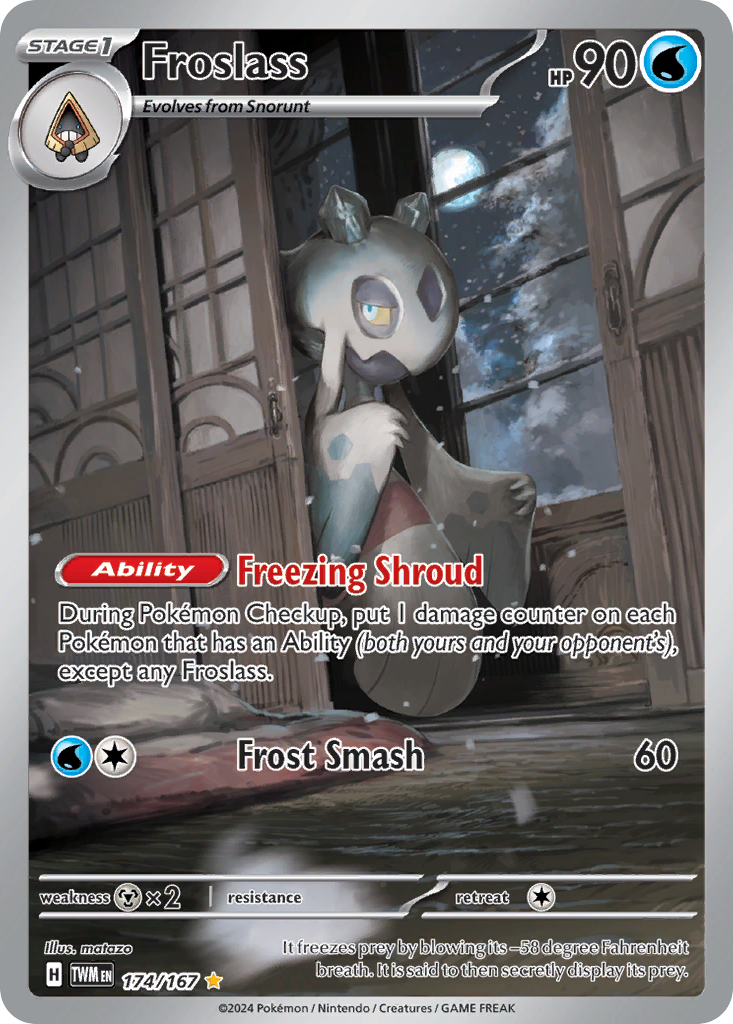
Froslass
2024Night brought indoors. Froslass drifts through a moonlit hall, cold blue light falling through tall windows — architecture doing the work of atmosphere.
View card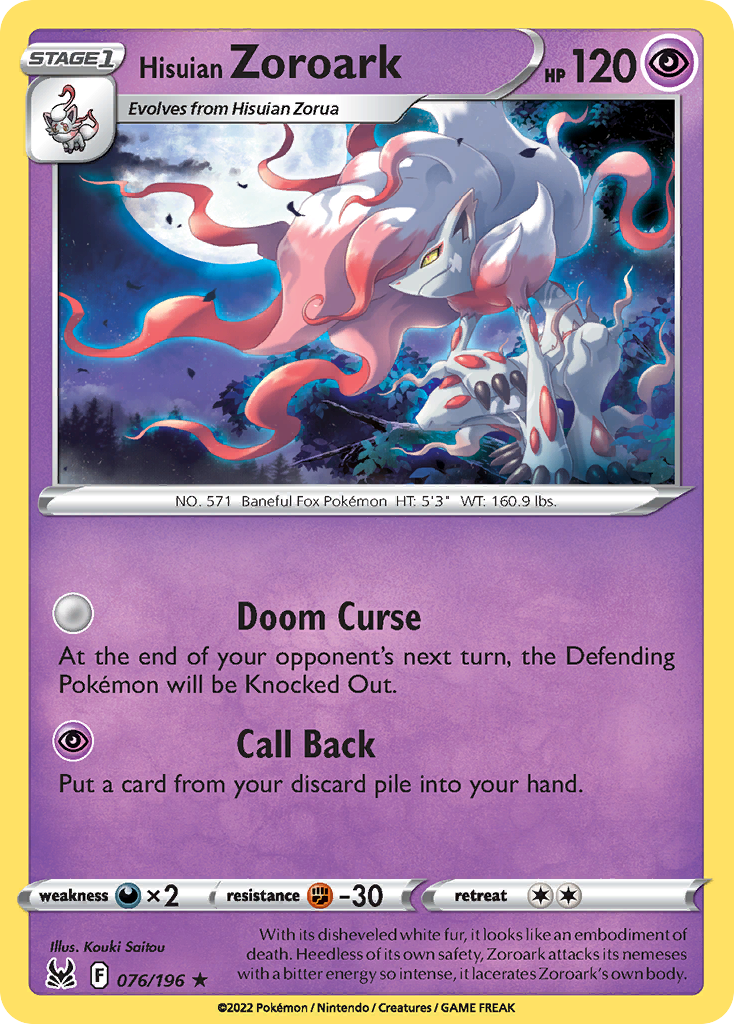
Hisuian Zoroark
2022Built from silhouette. The figure reads as pale shape and red wisp against a misted dark — recognition by outline, the way things are seen at night.
View card
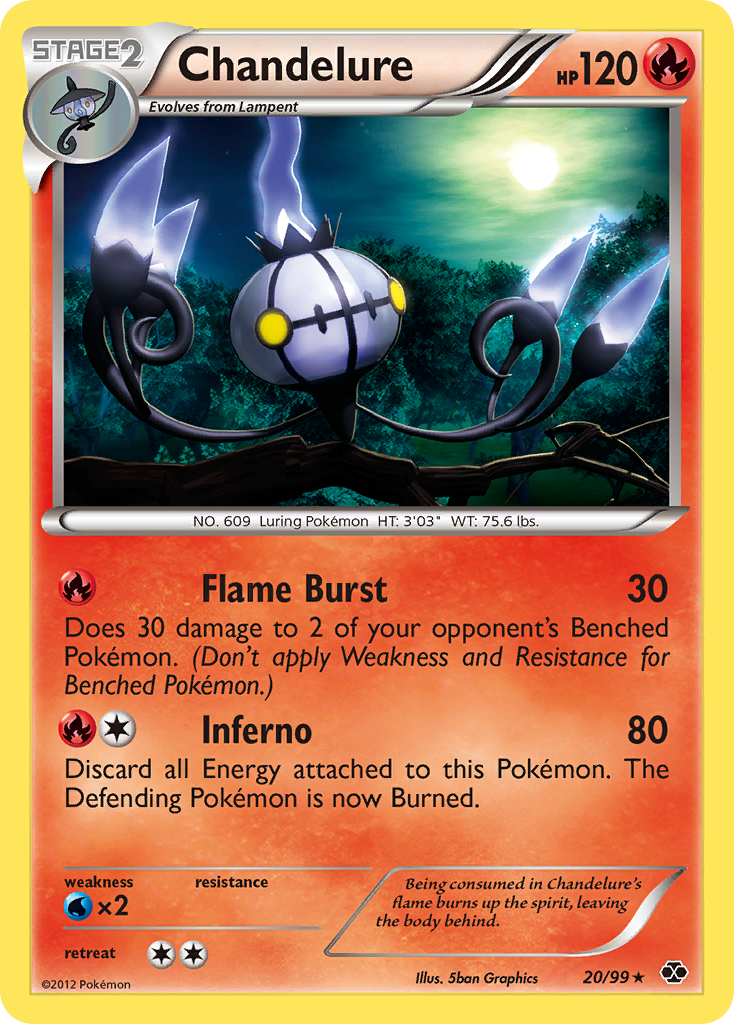
Chandelure
2012The glow is the whole light. Chandelure’s flames are the only source on the card, throwing colour onto nothing — darkness defined by the small fire at its centre.
View card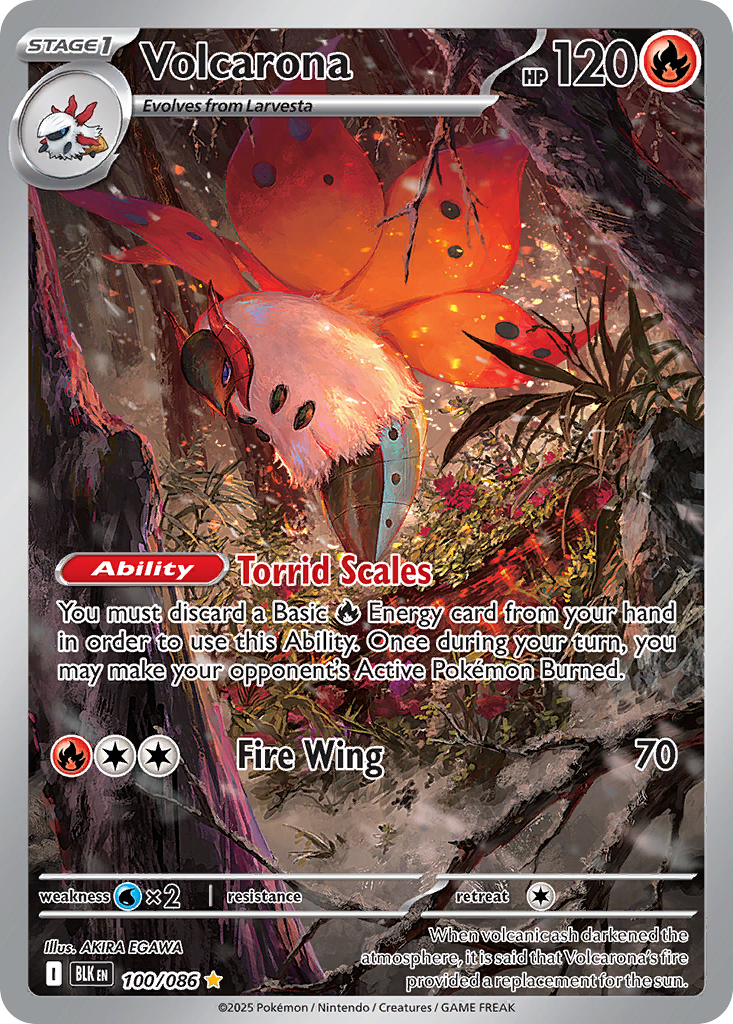
Volcarona
2025Embers in a cave. Volcarona’s wings smoulder orange against black rock — warm light in cold dark, the nocturne by firelight rather than moon.
View card
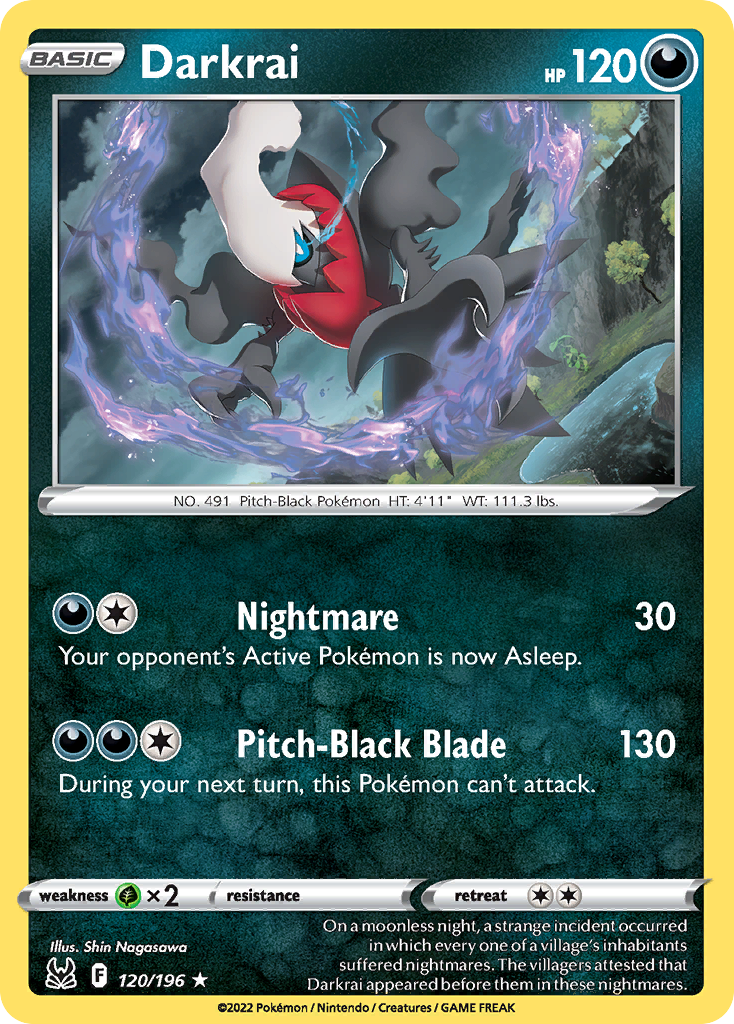
Darkrai
2022The creature dissolving into the dark. Darkrai is drawn almost as absence — edges bleeding into a black-green void, the night made into a body.
View card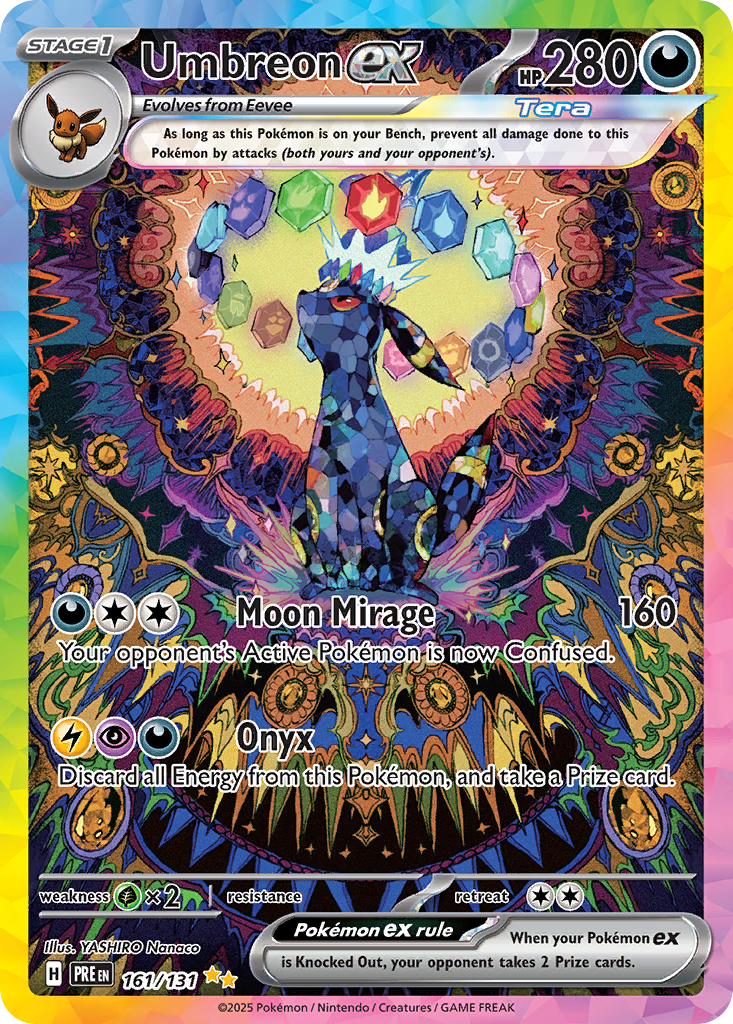
Umbreon ex
2025Moonlight as ornament. Umbreon sits inside a jewelled crescent of rings and gold, the lunar light worked into pattern — night rendered as something precious.
View card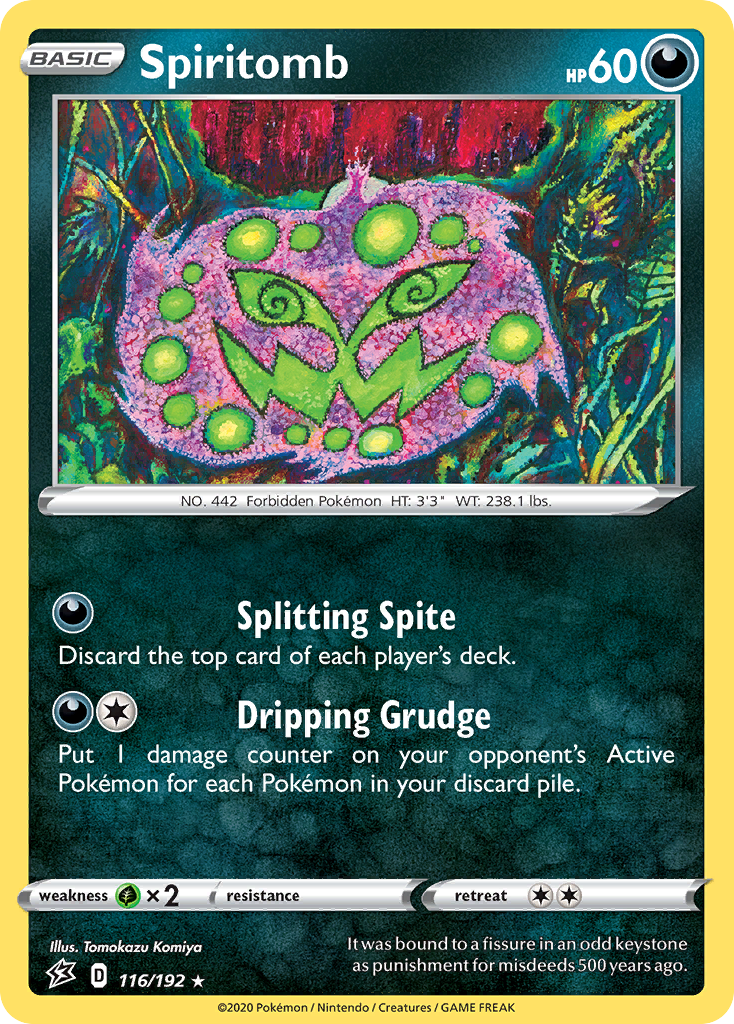
Spiritomb
2020Dark as surface. Komiya packs a green keystone with faces against a black damask — the night here is depth and pattern, every inch worked and unlit.
View card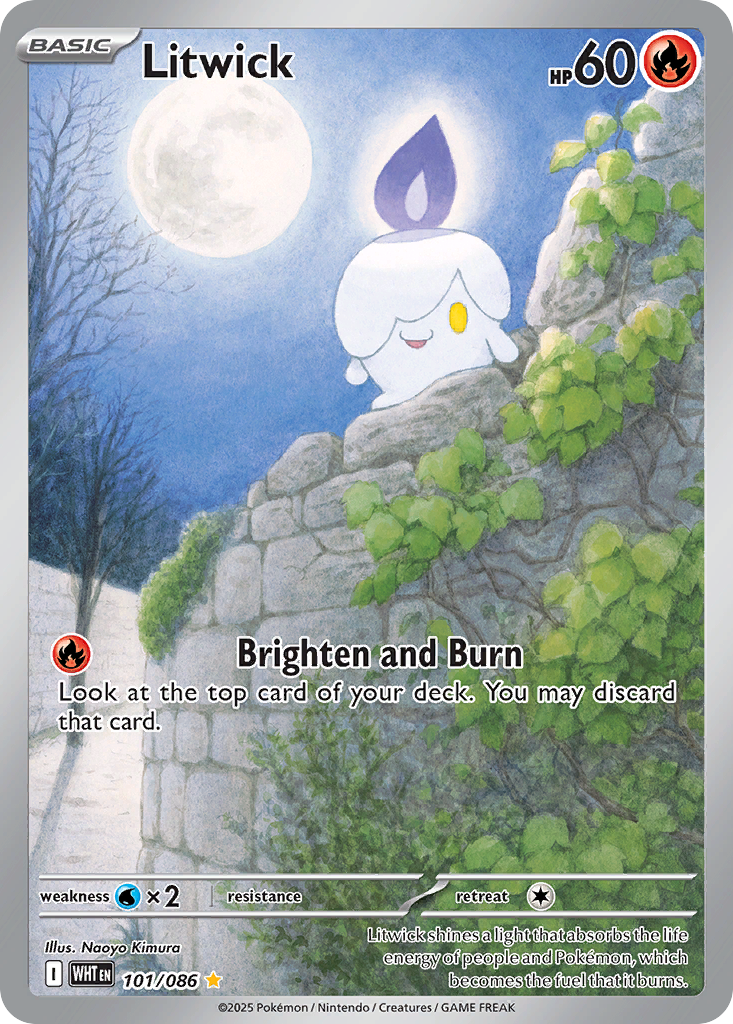
Litwick
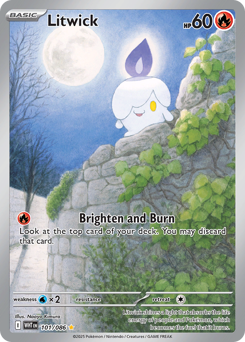
2025The quietest night. A small candle-flame, a full moon behind cloud, a stone wall — the gentlest possible nocturne, almost nothing happening in the soft dark.
View cardHow a card makes the dark visible
Three decisions every one of these cards makes about light.
- Where the light is allowed
- A night card is defined by what it refuses to light. One source — a moon, a flame, a glow — is permitted; everything else falls into shadow. The discipline is subtractive: the picture is built from what is left dark.
- Reading by silhouette
- With little light, shape carries meaning. Forms register as outline and edge rather than detail — the eye completes the figure from its silhouette, the way it would in an actual dark room.
- Night is a condition, not a colour
- These are not simply dark-coloured cards. A black background in daylight is not night. Night is low, directional light and held shadow — a set of choices an illustrator makes, regardless of the creature on the card.
This guide reads the nocturne as a visual condition — cards chosen for how they handle low-key light, silhouette, glow, and held shadow, not for being dark-coloured or for the creature’s type. Selections range across eras and illustrators and are refreshed periodically. Rarity, market value, and grade are not criteria.