Eevee, and the eight directions.
 Kanto · 2001–2020
One body, redrawn through eight elements
The silhouette barely changes. Everything else does.
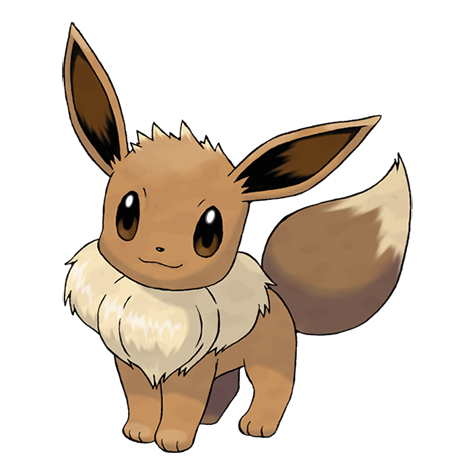
Most Pokémon are drawn once and re-drawn as themselves. Eevee is drawn as a question: a small, soft, unfinished body that the medium answers eight ways. Fire, water, electricity, psychic light, moonlight, leaves, ice, and fairy pink — each evolution keeps Eevee’s rounded contour and large eyes almost exactly, then changes everything around it: the palette, the light, the surface, the world the creature stands in. Read together, the line is a controlled experiment in how much you can transform an image while keeping it legible — adaptability not as a story, but as a drawing problem.
One creature, nine cards, eight directions
Eevee and one card for each evolution — chosen for distinct palette, light, and element, not for fame or rarity.
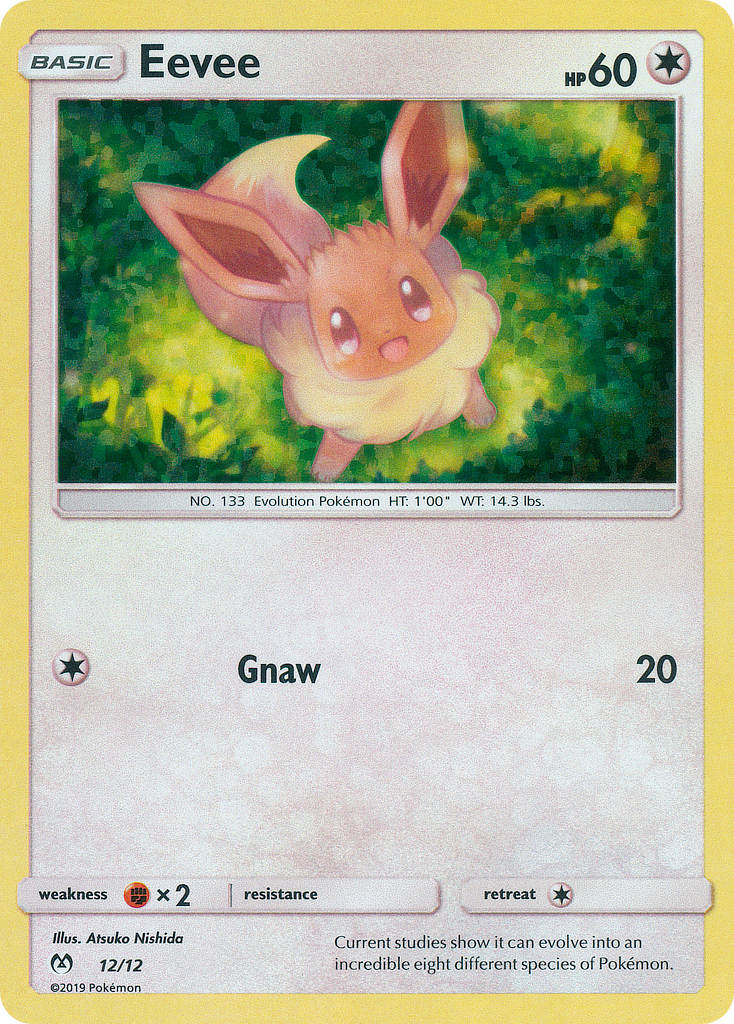
Eevee
2019The starting point. Nishida draws the base body soft, brown, and domestic — rounded contour, large eyes, no element yet attached. Everything that follows is a variation on this shape.
View card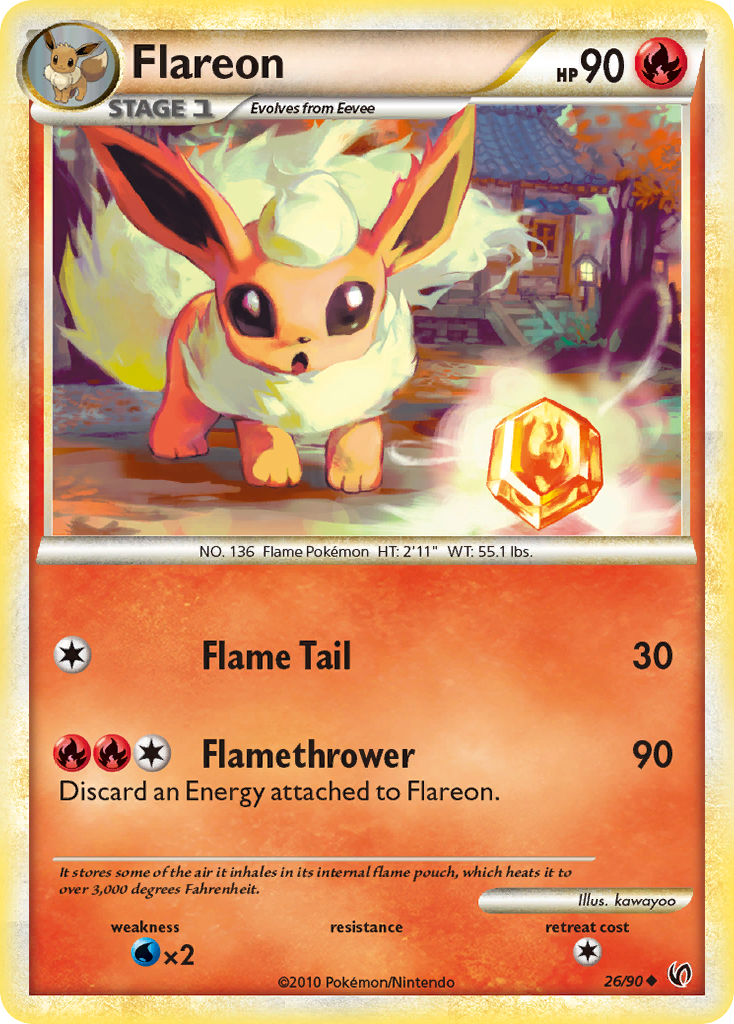
Flareon
2010The warm answer. The same body by a hearth, fur lit orange and red — the contour unchanged, the palette and light turned to fire.
View card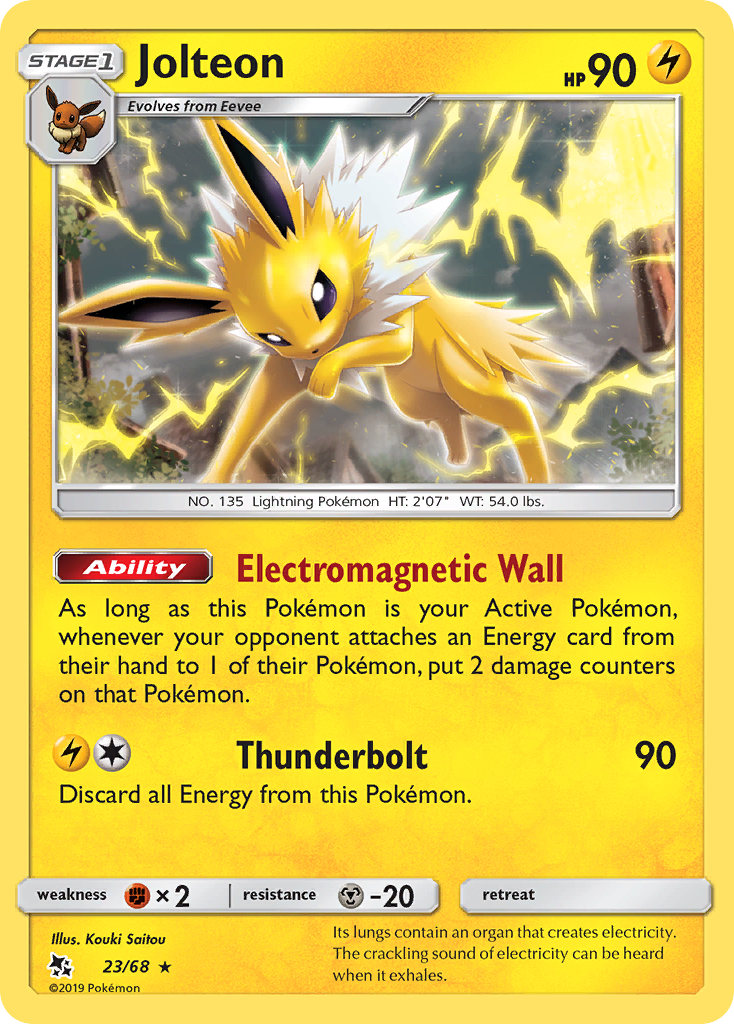
Jolteon
2019The charged answer. Spiked fur mid-leap, crackling blue against yellow — the soft shape made angular and electric by texture and motion alone.
View card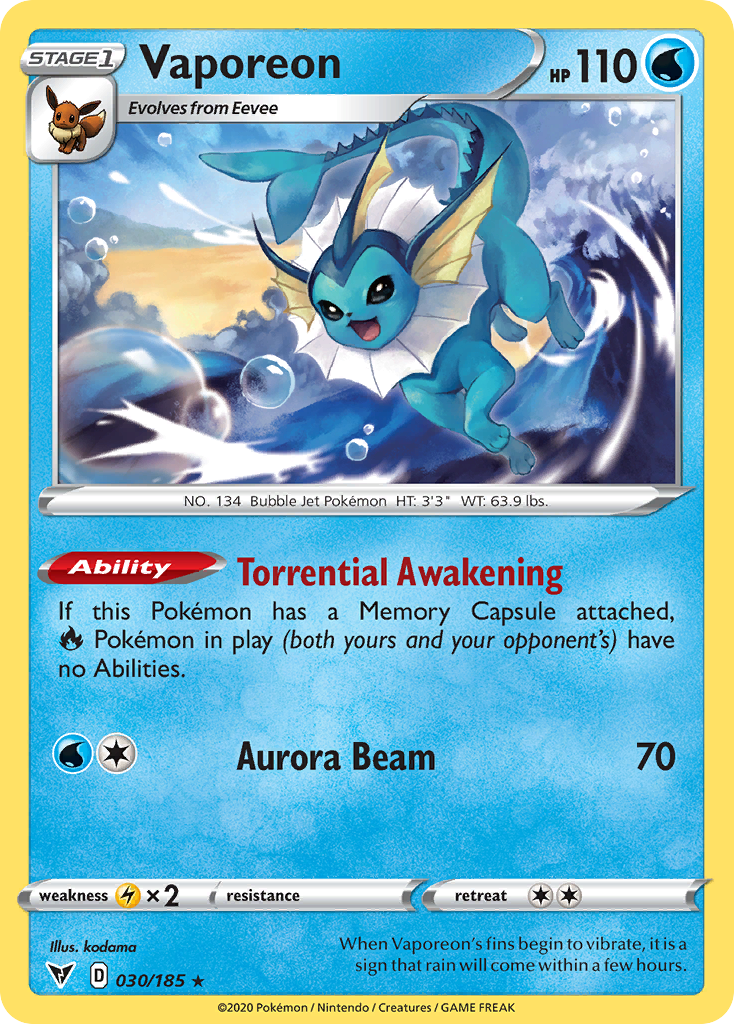
Vaporeon
2020The cool answer. The body dissolved into aquamarine, fins and water sharing one palette — the creature half-made of its own element.
View card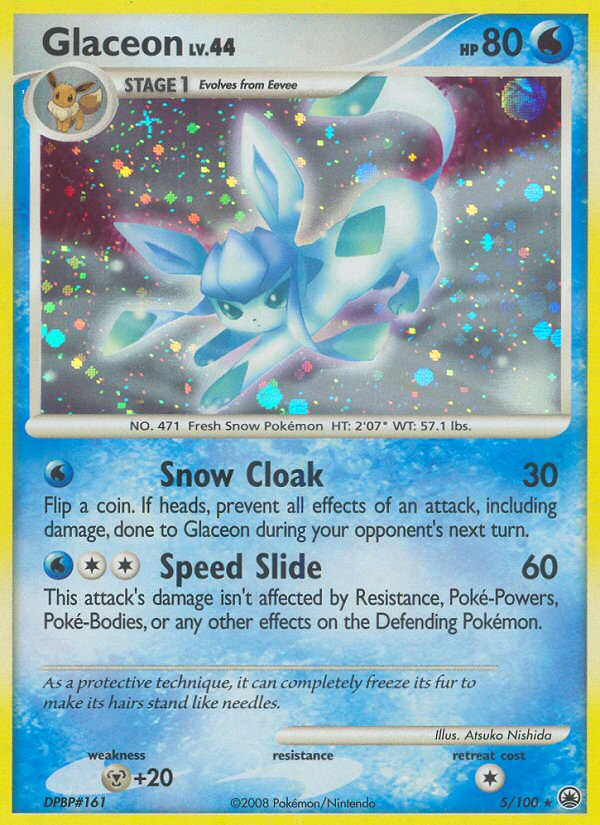
Glaceon
2008Colder still. Pale blue and frost, the warm origin chilled to ice — Nishida keeps the gentleness while draining all the heat from the palette.
View card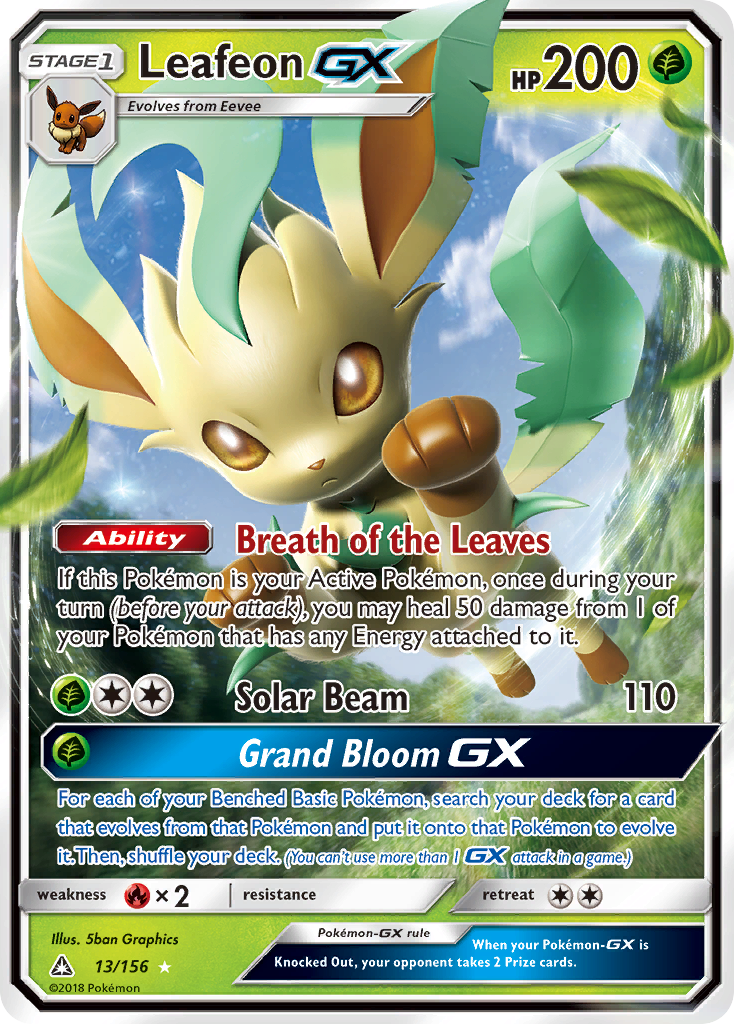
Leafeon-GX
2018The botanical answer. Fresh greens and leaf-forms wrap the body, the fur reading as foliage — element expressed as surface and setting.
View card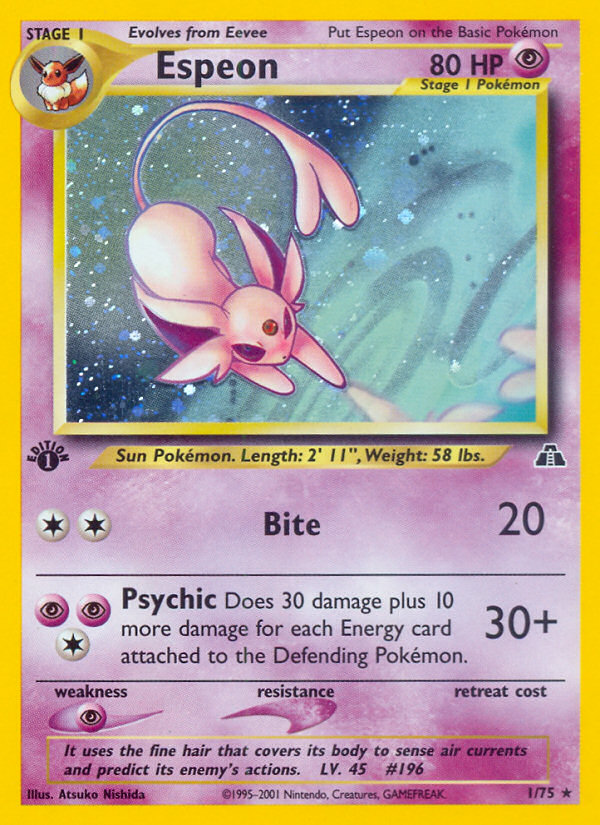
Espeon
2001Into atmosphere. The body lengthened and lit gold, elegant and still — psychic identity carried by golden light and poise rather than effect.
View card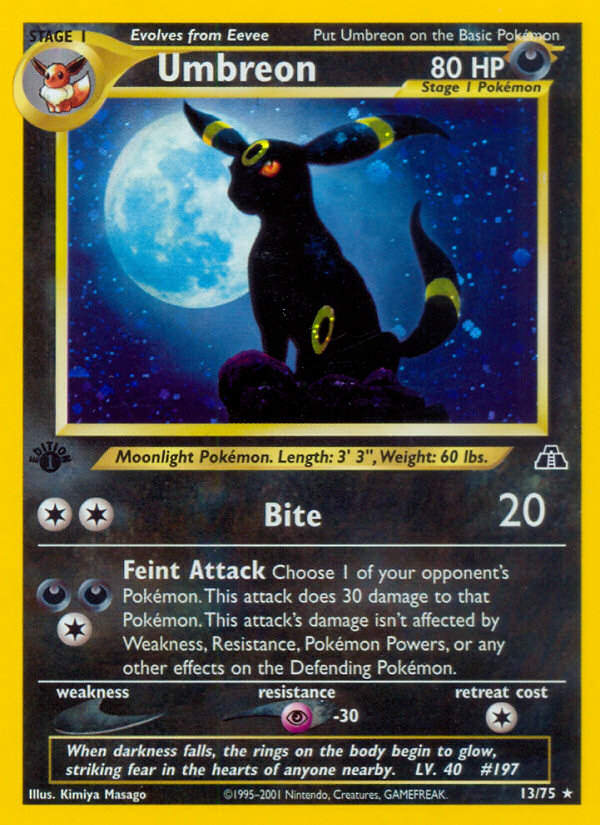
Umbreon
2001Its night counterpart. The same lineage under a full moon, rings glowing — the day-creature’s exact opposite in light, drawn from the identical shape.
View card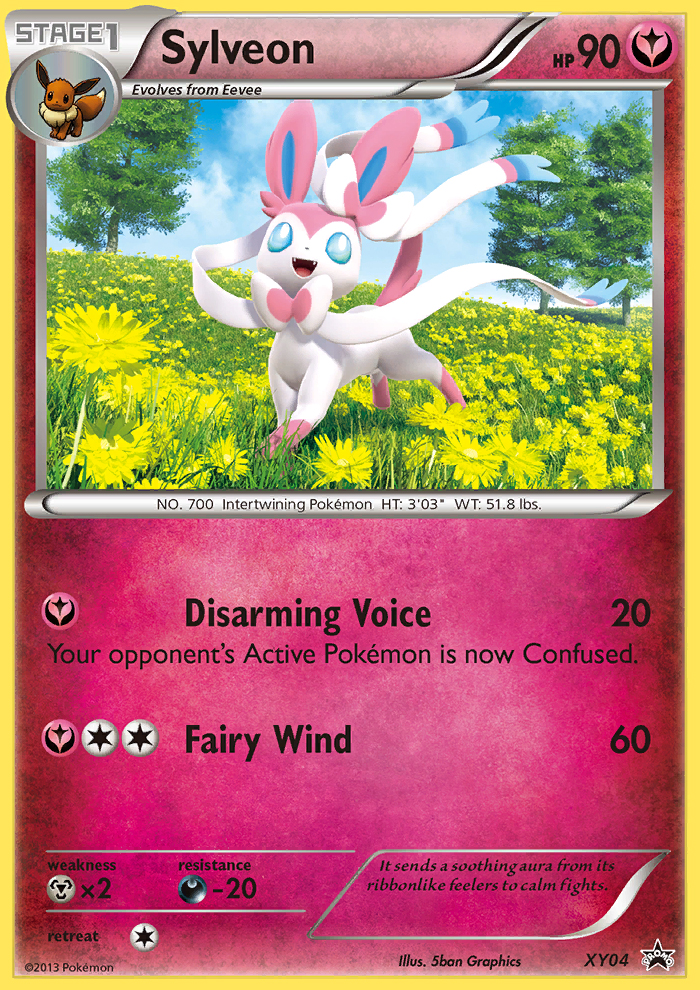
Sylveon
2013The newest direction. Pink ribbons in a bright meadow — the softest answer of all, the contour rounded one degree further into fairy gentleness.
View cardHow far an image can travel
Three things that stay fixed — and three that change — across the line.
- What stays
- Across all nine cards the contour barely moves: the rounded body, the oversized eyes, the small upright stance. Recognition is anchored in silhouette, which is why the eye accepts even the most extreme recolour as “still Eevee.”
- What changes
- Everything else is variable — palette, light temperature, surface texture, and the environment the creature stands in. Each evolution is essentially a lighting-and-colour brief applied to a fixed model.
- Day and night, side by side
- Espeon and Umbreon make the experiment explicit: the same body lit as warm golden day and as cold moonlit night. Placed together, they show how completely light alone can change a creature’s mood.
More to read.
This guide reads Eevee and its evolutions as one design problem — chosen for how each card varies palette, light, texture, and setting on a near-fixed body, not for popularity, rarity, or value. One card per form, across eras and illustrators; selections are refreshed periodically.